
CASBS Institute on Diversity - 2025
Participants
Malik Boykin
Brown University
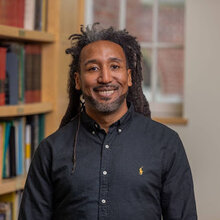
Dr. C. Malik Boykin received his doctorate in Social and Personality Psychology from UC Berkeley, his M.A. in Social-Organizational Psychology from Teachers College, Columbia University, and his B.S. in Psychology from the University of Maryland - Global Campus – after first attending Howard University. He was a Presidential Postdoctoral Fellow for two years at Brown in the Department of Cognitive, Linguistic, and Psychological Sciences before his current faculty appointment. His research focuses on intergroup relations, hierarchy, prejudice, mentorship, and racial identity. Several of these themes inform his research on attitudes toward HBCUs and bias in decision-making algorithms. He has affiliate appointments with the Center for the Study of Race and Ethnicity in America (CSREA), the Annenberg Institute for Education Inequality Research, and the Data Science Institute (DSI). He has previously secured funding from the Ford Fellowship Foundation, the National Science Foundation, the Greater Good Science Center, and the Society for Multivariate Experimental Psychology to conduct his research. Dr. Boykin is a member of the Society for Personality and Social Psychology (SPSP), the Society for Industrial and Organizational Psychology (SIOP), and the Omega Psi Phi Fraternity Inc.
Melissa Brown
Santa Clara University
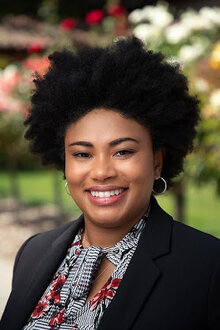
Dr. Melissa Brown, an Assistant Professor of Communication at Santa Clara University, specializes in media and technology studies, digital feminism, and digital intimacies. She is formerly a Public Voices Fellow for Technology in the Public Interest with the Op-Ed Project, supported by the MacArthur Foundation. With a Ph.D. in sociology from the University of Maryland, Dr. Brown further honed her expertise with a postdoctoral fellowship at Stanford's Clayman Institute for Gender Research. Her work explores race, class, gender, and sexuality in digital culture, drawing on Black feminist thought, critical race theory, and digital sociology. She focuses on the impact of digital media representations on knowledge, identity, power, and social justice, particularly within Black experiences. Her academic contributions include research on anti-racism, Black feminist activism, and Black digital culture, published in various journals and edited volumes. Most recently, Dr. Brown published a piece in Feminist Media Studies titled “Instagram vixens: the racialized sexual scripts of erotic labor online.”
Camellia Bryan
University of British Columbia

Dr. Camellia Bryan is an Assistant Professor at the UBC Sauder School of Business whose research investigates why DEI efforts provoke backlash—and how organizations can disrupt it. Her work examines the identity threats and resistance that arise among dominant-group employees, while offering pathways to cultivate allyship and transform opposition into progress. Her recent article, “Beyond Backlash: Advancing Dominant-Group Employees’ Learning, Allyship, and Growth Through Social Identity Threat” (Academy of Management Review), has positioned her as a leading voice on diversity resistance. She also co-leads the “DEI U-Turns” project, which examines how both dominant and marginalized group members come to withdraw support from DEI initiatives. Dr.Bryan’s research has been featured in The Globe and Mail, The Tyee, national radio, and podcasts, and she is a frequent speaker for academic and industry audiences.
James Carter
Cornell University

Dr. James T. Carter is an Assistant Professor in Organizational Behavior at Cornell University. His research broadly examines the psychological and contextual factors that pose barriers and offer pathways to improving diversity and inclusion in organizations. His work has been published in outlets such as Psychological Science, American Sociological Review, Organizational Behavior and Human Decision Processes, and the Personality and Social Psychological Bulletin. He holds a Ph.D. from Columbia Business School and a BA in Psychology (with honors) and English from Rice University.
Edward Chang
Harvard Business School
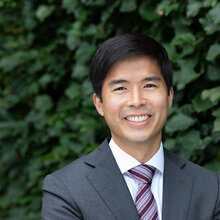
Dr. Edward Chang (he/him/his) is an Assistant Professor at Harvard Business School. He studies diversity, equity, and inclusion in organizations. The primary goal of his research is to provide evidence-based solutions to managers and organizations wanting to promote diversity, equity, and inclusion. He runs large-scale field experiments, analyzes archival data, and conducts online and laboratory experiments to carry out his research.
Professor Chang earned a Ph.D. in Operations, Information and Decisions from the Wharton School of University of Pennsylvania. He holds a B.A. in Mathematics and Philosophy from Yale University. Prior to pursuing his Ph.D., Professor Chang worked as a data scientist for technology startups.
Lisa Covington
Brown University
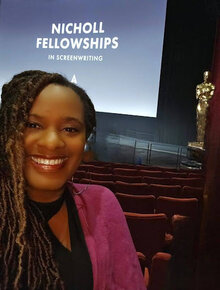
Dr. Lisa Covington is the co-founder of The Global Institute for Black Girls in Film & Media, Visiting Scientist at Brown University and was selected to serve as a Delegate-Representative to the United Nations Commission on the Status of Women. She completed her Ph.D. at The University of Iowa and recently earned Postdoctoral Scholar of the Year at the University of Arizona.
She has a strong track record of applied scholarship and community engagement through implementing two programs prioritizing culturally responsive programming in Iowa. These two programs supported Black high school students across the state and undergraduate students. As a result, she received the Dr. Martin Luther King, Jr. Achievement Award from the Iowa Human Rights Commission.
This Global Institute of Black Girls in Film & Media illustrates the application of the research Dr. Covington has done to bring her scholarship to real world settings. She serves as Scholar in Residence and buikds with Independent and Hollywood studios on just media practices, coordinates think tanks and collaborates with industry creatives.
Dr. Covington is co-author of “Represent: Race and Resistance in Iowa.” She serves on boards of the National Women’s Studies Association, Black Lives Matter at School, Coalition of Liberated Ethnic Studies and the National Urban League Young Professionals.
Donghyun Danny Choi
Brown University
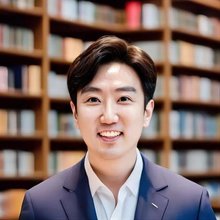
Dr. Donghyun Danny Choi is an assistant professor of political science at Brown University. As a political scientist specializing in identity politics and intergroup relations, he studies the challenges associated with governance and representation in diverse societies, with a special focus on how to better facilitate the inclusion of minoritized communities. His first (coauthored) book, Native Bias, examines how common norms and ideas can facilitate the inclusion of immigrants in democratic societies and was published by Princeton University Press in 2022. He is currently working on a series of projects that investigate the legacies of institutionalized discrimination against Asian Americans, focusing on the case of Chinese Exclusion and Japanese Internment in the United States. Danny was a pre/postdoctoral fellow at the Identity and Conflict Lab at the University of Pennsylvania and received his Ph.D. in political science from the University of California, Berkeley.
Fade Eadeh
Seattle University
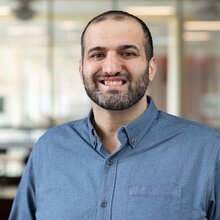
Dr. Fade Eadeh is an Assistant Professor in Psychology at Seattle University. His work focuses on the consequences of threat and emotion within social psychology and personality psychology, and how different psychological processes contribute to shifts in emotions and political preferences. He received a Ph.D. in Psychological and Brain Sciences from Washington University. He has published extensively in top social psychology journals, including the Journal of Personality and Social Psychology, Journal of Experimental Social Psychology, Journal of Experimental Psychology-General, Social Psychological and Personality Science, and Advances in Experimental Social Psychology. Moreover, his work has been mentioned in popular press outlets, including The New York Times, The Wall Street Journal, Quartz Magazine, The Huffington Post, Glamour Magazine, and Yahoo.
Afiya Fredericks
Morgan State University

Dr. Afiya Fredericks, PhD is an Associate Professor, Advanced Studies, Leadership & Policy in the School of Education and Urban Studies at Morgan State. Her research is centered around understanding the impact of implicit beliefs on motivation and achievement. More specifically she focuses on better understanding how mindset research can be leveraged to create more equitable learning environments, particularly for minoritized students in STEM.
As a trained Developmental Psychology, Afiya has been immersed in mindset research for well over a decade now. She is the former Director of Professional Learning at Mindset Works Inc, a company co-founded by Dr. Carol Dweck. There, she supported the implementation of Growth Mindset programs and practices in hundreds of schools and organizations for 6 years before joining academia. As a life-long learner, Afiya believes that embodying a growth mindset—focusing on process over product, transforming challenges, setbacks and failures into learning opportunities-- is a beautiful journey that she continues to work on daily. She is a proud US Virgin Islander who enjoys opportunities to escape home to the beautiful island of St. Croix.
Nidia Ruedas-Gracia
University of Illinois, Urbana- Champaign
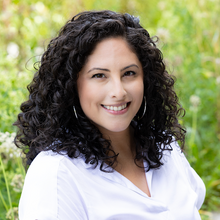
Dr. Nidia Ruedas-Gracia is an assistant professor of educational psychology at the University of Illinois, Urbana-Champaign. She earned a BA from the University of California, Los Angeles (UCLA) in Psychology and Sociology, an MA from New York University (NYU) in Human Development and Social Intervention, and a PhD from Stanford University in Developmental and Psychological Sciences.
Research in her lab (Gracia Lab) seeks to develop a nuanced understanding of what it means to "belong" and how this sense of belonging impacts life outcomes such as academic performance and mental health and physical health. Together with her research team, Nidia focuses on exploring these concepts among culturally diverse populations, and examining how sense of belonging is associated with various social identities (gender, race/ethnicity, socioeconomic status, etc.).
Tina Law
University of California, Davis
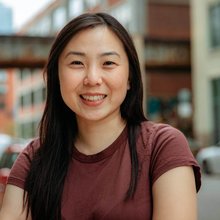
Dr. Tina Law is an Assistant Professor of Sociology at the University of California, Davis. She studies inequality, race and ethnicity, democracy, AI, and computational methodology. Her current research examines the role of AI in shaping social and political inclusion in the U.S. In her recent collaborative projects, she designed methodological frameworks for analyzing large-scale text and image data with AI to advance understanding of economic inequality and residential segregation. She also developed guidance for social scientists on how to navigate and contribute to ongoing policy debates about AI governance. Tina was previously a Postdoctoral Scholar with the Stone Center on Socio-Economic Inequality at the City University of New York. She received a Ph.D. in sociology from Northwestern University.
Oneya Okuwobi
University of Cincinnati
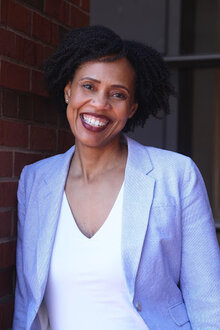
Dr. Oneya Fennell Okuwobi is Assistant Professor of Sociology at the University of Cincinnati. Her research integrates the sociology of race, organizations, and religion to interrogate the effects of diversity practices in organizations. Specifically, this includes work to examine how racial status differences affect interactions in diverse organizations and how diversity ideology and the practices it informs affect racial inequality. She is author of Who Pays for Diversity? Why Programs Fail at Racial Equity and What to Do About It. In it, Oneya find that the pervasive commodification of employees of color in the name of diversity leads to heavy work burdens, threatened organizational and personal legitimacy, and subjugated identity- all of which hinder the well-being and opportunities for career advancement of employees of color. Her work has also appeared in American Sociological Review, Sociology of Race and Ethnicity, Social Psychology Quarterly, and Sociology of Religion among other venues. Oneya was previously a corporate finance manager with 14 years’ experience in strategic business planning, category expansion, and organizational leadership. She is a graduate of the University of Virginia (B.A., Economics), Regent University (M. Div., Practical Theology), and The Ohio State University (Ph.D., Sociology).
Julian Rucker
University of North Carolina at Chapel Hill
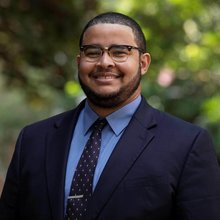
Dr. Julian Rucker is a Social Psychologist and Assistant Professor of Psychology & Neuroscience at the University of North Carolina at Chapel Hill. Broadly, his research examines the psychological factors shaping perceptions of, and motivation to reduce, societal racial inequality. One of his main lines of research investigates whether Americans hold accurate perceptions of the extent of past and contemporary racial inequality, across several domains (e.g., wealth, education, health). His other main line of research explores how the lay tendency to conceptualize discrimination in terms of interpersonal biases, or with structural processes that disadvantage members of marginalized groups, relates to beliefs about societal inequality.
He earned his Ph.D. in Psychology from Yale University., his M.A. in Psychology from Northwestern University, and his B.A. in Psychology from The University of Texas at Austin. He also served as Carolina Postdoctoral Program for Faculty Diversity Fellow prior to joining the faculty at UNC. Julian grew up in Columbia, MD and, in his spare time, enjoys hiking with his dogs, playing slowpitch softball, and repairing/restoring guitars.
Kiara Sanchez
Dartmouth College
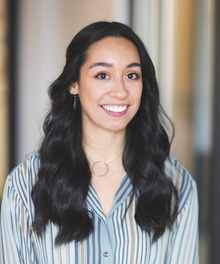
Dr. Kiara Sanchez (she/her) is an Assistant Professor in the Department of Psychological and Brain Sciences at Dartmouth College. Her lab at Dartmouth is called the Social Identity in Dialogue (SID) Lab. With the SID Lab, Kiara explores how people talk about race and ethnicity, the risks and benefits people with different identities face in these conversations, and strategies to address these challenges. Her research examines these questions in diverse contexts, including friendships, education, social media, and mentor-mentee relationships. She runs experiments online, in the lab, and in the field, and analyzes language in large datasets. She also tests interventions to improve interracial communications. In doing so, she seeks to identify strategies to support racial-ethnic identity development, shared racial-ethnic consciousness, solidarity and authenticity. Kiara earned a Ph.D. in Psychology from Stanford University and a B.A. in Psychology and Sociology from Rice University.
Christine Slaughter
Boston University
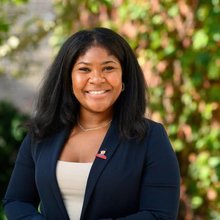
Dr. Christine Marie Slaughter is an Assistant Professor of Political Science at Boston University. Her research and teaching focus on African American politics, inequality, voting rights, and political psychology, with special attention to the political experiences of Black women. She is completing her book manuscript, Resilience to Adversity: How Black Voters are Mobilized to Counter Voter Suppression, introducing the concept of racial resilience to explain Black political behavior. Her research has been supported by the Russell Sage Foundation, Gates Foundation, Ford Foundation, National Science Foundation, and the American Political Science Association.
Dr. Slaughter earned her Ph.D. in Political Science from the University of California, Los Angeles. Before joining Boston University, she held postdoctoral fellowships at Princeton University and the University of California. Her work appears in the Journal of Race, Ethnicity and Politics, Politics & Gender, Politics, Groups, and Identities, and other top journals.
A proud graduate of Spelman College, where she was a UNCF/Mellon Mays Fellow, Dr. Slaughter is committed to connecting scholarship with public life. She actively engages with local media and communities. Learn more at www.christinemslaughter.com.
Andrew Thompson
University of Pennsylvania

Dr. Andrew Thompson is an Assistant Professor of Political Science at the University of Pennsylvania. His research is in American politics, political behavior, and experimental methods.
Substantively, his recent work focuses on the causal role of racial threat in democratic erosion within the mass American public. His book manuscript (under review at Oxford University Press) and a series of recent articles articulate the logic behind how the public’s perceptions on racial demographic changes consistently shift their views of democracy and support for political violence. Thompson’s research appears in Perspectives on Politics, Political Behavior, among other outlets.
Heidi Vuletich
University of Denver
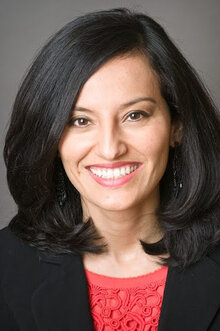
Dr. Heidi Vuletich's research examines the causes and consequences of social inequalities, with a focus on disparities related to socioeconomic status (SES), gender, and race. She investigates the factors that contribute to these inequities and how they shape motivation, decision-making, attitudes, and beliefs. A central goal of her work is to understand how these dynamics ultimately impede social mobility through discrimination, bias, and stereotyping. Much of Dr. Vuletich's research takes a context-based approach, analyzing the environmental and situational factors that perpetuate disparities.
Organizers
Mary Murphy
Indiana University
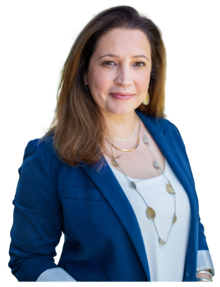
Dr. Mary C. Murphy is the Herman B. Wells Endowed Professor at Indiana University and founder of the Equity Accelerator. Dr. Murphy was a CASBS fellow from 2015-2016. She is a recognized international leader in the field of equity, diversity, and inclusion in educational and organizational settings. She teaches undergraduates, graduate students, and executives and advises CEOs and leaders on how to create more inclusive growth-minded learning and working environments.
Dr. Mary Murphy is Latina -- born and raised in San Antonio, Texas. She earned a B.A. from the University of Texas at Austin and a PhD from Stanford University. She completed a NSF postdoctoral fellowship at Northwestern University. In 2012, she joined the faculty of Indiana University and, in 2013, was named a Rising Star by the Association for Psychological Science (APS). In 2019, she was awarded the Presidential Early Career Award for Scientists and Engineers (PECASE)—the highest honor bestowed on early career scientists by the United States Government. She is the recipient of more than $8 million in federal and foundation grants including a recent $2.2 million NSF CAREER award for her research on strategies to improve diversity in STEM organizations. Her research has been profiled in The New York Times, Forbes, Harvard Business Review, Scientific American, and NPR, among other outlets. Mary’s new book on organizational mindset, Cultures of Growth, was published by Simon & Schuster this year.
Sylvia Perry
Northwestern University
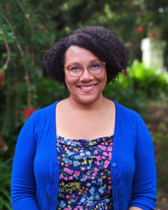
Dr. Sylvia Perry is the Principal Investigator of the Social Cognition and Intergroup Processes (SCIP) Lab, an Associate Professor of Psychology, and a Faculty Fellow at the Institute for Policy Research at Northwestern University. She was a CASBS fellow from 2022-2023. Dr. Perry’s research is situated at the intersection of social, developmental, and health psychology.
Dr. Perry is originally from Raleigh, North Carolina. She received her BA in Psychology from the University of North Texas in Denton, Texas, and her MA and PhD in Social Psychology from the University of Illinois at Chicago. Dr. Perry was a National Institutes of Health postdoctoral associate at Yale University. From 2014-2016, she was an Assistant Professor of Psychological Science at the University of Vermont. In 2016, she joined the faculty at Northwestern University. Her work has been funded by the National Institutes of Health and published in journals such as the Journal of Personality and Social Psychology, Perspectives on Psychological Science, Developmental Psychology, and Social Science & Medicine.
Dr. Perry has received numerous awards for her research, including the Society for Personality and Social Psychology’s SAGE Young Scholar Award (2021) and the Ann L. Brown Award for Excellence in Developmental Research (2024). Several national media outlets, including The Washington Post, National Public Radio, The New York Times, New York Magazine, and the Chicago Sun-Times have featured her work.