
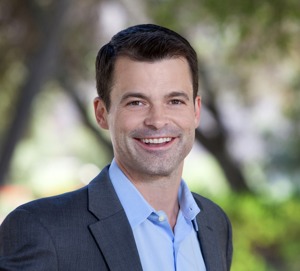
Robb Willer
Fellowship year
2020-21 - Stanford University - Study 11
2012-13 - University of California, Berkeley - Study 12
Faculty Fellow year
2026-27 - Stanford University
2025-26 - Stanford University
2024-25 - Stanford University
2023-24 - Stanford University
As a faculty fellow, Robb Willer will work on a theoretical framework for understanding collective actions in representative democracies, including an analysis of the factors shaping individuals’ strategic choices.
Willer is a professor of sociology and (by courtesy) psychology and organizational behavior at Stanford University where he directs the Politics and Social Change Lab and the new AI for Public Benefit Lab. His work is focused on strategies for overcoming political divisions to foster social change. He employs diverse methods in his research, including survey and behavioral experiments, large language models, natural language processing, and social network analysis. Willer’s has published in a range of outlets, including Science, Nature, PNAS, American Sociological Review, Journal of Personality and Social Psychology, American Journal of Political Science, and Administrative Science Quarterly. His popular writing has appeared in the New York Times, Washington Post, Vox, and CNN. He is a 2026 Guggenheim Fellow. His TED talk -- “How to Have Better Political Conversations” -- has been viewed over three million times. Outside of his academic research, Willer consults for various organizations, including the Bill and Melinda Gates Foundation, the AFL-CIO, the Department of Justice, and two presidential campaigns. Willer was a CASBS fellow in 2012-13 and 2020-21.
Tyler Journal Articles
Leong, Yuan Chang; Chen, Janice; Willer, Robb; Zaki, Jamil; . 2020. Conservative and liberal attitudes drive polarized neural responses to political content. 117(44): 27731-27739. http://www.pnas.org/content/117/44/27731.abstract
Stellar, Jennifer E.; Willer, Robb; . 2014. The Corruption of Value: Negative Moral Associations Diminish the Value of Money. 5(1): 60-66. https://doi.org/10.1177/1948550613484770
Simpson, Brent; Harrell, Ashley; . 2013. Hidden paths from morality to cooperation: Moral judgments promote trust and trustworthiness. 91(4): 1529-1548. https://doi.org/10.1093/sf/sot015
Young, Olga Antonenko; Willer, Robb; Keltner, Dacher; . 2013. "Thou shalt not kill": Religious fundamentalism, conservatism, and rule-based moral processing. 5(2): 110-115.
Feinberg, Matthew; Antonenko, Olga; Willer, Robb; Horberg, E. J.; John, Oliver P.; . 2014. Gut check: Reappraisal of disgust helps explain liberal-conservative differences on issues of purity. 14(3): 513-521.
Côté, Stéphane; Piff, Paul K.; Willer, Robb; . 2013. For whom do the ends justify the means? Social class and utilitarian moral judgment. 104(3): 490-503.
Willer, Robb; Conlon, Bridget; Rogalin, Christabel L.; Wojnowicz, Michael T.; . 2013. Overdoing gender: A test of the masculine overcompensation thesis. 118(4): 980-1022. https://doi.org/10.1086/668417
Simpson, Brent; Willer, Robb; Ridgeway, Cecilia L.; . 2012. Status hierarchies and the organization of collective action. 30(3): 149-166. https://doi.org/10.1177/0735275112457912
Feinberg, Matthew; Willer, Robb; . 2013. The Moral Roots of Environmental Attitudes. 24(1): 56-62. https://doi.org/10.1177/0956797612449177
Saslow, Laura R.; Willer, Robb; Feinberg, Matthew; Piff, Paul K.; Clark, Katharine; Keltner, Dacher; Saturn, Sarina R.; . 2013. My Brother's Keeper?: Compassion Predicts Generosity More Among Less Religious Individuals. 4(1): 31-38. https://doi.org/10.1177/1948550612444137