2025 Summer Institute on Organizations Participants Announced
In summer 2025, from July 6-19, the Center for Advanced Study in the Behavioral Sciences (CASBS) at Stanford University will welcome the seventh cohort of its institute on “Organizations and Their Effectiveness.” The purpose of the institute is to achieve a fundamental advance in the academic discussion of organizations, and organized activities more generally, fueled by cross-disciplinary conversations, friendships, and collaborations.
The institute, launched in 2016, revived a storied legacy and history of foundational scholarship in the field of organization studies conducted at the Center by CASBS fellows and others.
Institute participants are young scholars (ranging from late-stage graduate students to advanced assistant professors) whose careers studying organizations are underway, and who have demonstrated an interest in and an aptitude for expanding their thinking about organizations, embracing other fields and methodologies. An essential component of the institute is that it is cross-disciplinary; it brings together a cohort of highly promising young researchers from a wide range of fields and universities.
From a large pool of competitive applicants, co-directors Bob Gibbons (Sloan School of Management and Economics, MIT) and Woody Powell (Graduate School of Education and Sociology, Stanford), both two-time CASBS fellows, are pleased to announce the 2025 participants.
2025 CASBS Summer Institute: Organizations and Their Effectiveness
Participants
Shan Aman-Rana
I’m an Assistant Professor of Economics at the University of Virginia. The research areas I find fascinating are Political Economy, Development, and Organizational Economics. I earned my PhD from the London School of Economics, and before academia, I worked as a Pakistan Administrative Services bureaucrat.
Dahyun Choi

I am a Ph.D. candidate in Politics at Princeton University. My research explores how bureaucrats and interest groups strategically use information across a wide range of policy domains, including, but not limited to, environmental and financial regulations. My dissertation examines multiple dimensions of this broad question, including how competing interest groups collaborate to produce information, the empirical challenges of quantifying the information supply by interest groups, and how bureaucrats obtain information to improve public policy outcomes. Beyond my dissertation, I study the dynamics of party organizations and the production of policy-relevant knowledge. To investigate these questions, I conduct theoretically motivated empirical analyses, integrating formal modeling with recent advancements in computational methods, including large language models and text-as-data methods. Outside of research, I enjoy playing the piano and exploring different varieties of green tea. I look forward to meeting everyone at the Summer Institute!
Vanessa Conzon

I am an assistant professor of Management & Organization at Boston College’s Carroll School of Management. I completed my PhD at MIT Sloan in the Organization Studies group. My research explores the relationship between autonomy and (in)equality. Empirically, my work often focuses on employee control of work time and tasks, and how this intersects with gender and class. I primarily use qualitative methods, especially ethnography (e.g. observations, interviews). I also incorporate quantitative methods into my field studies.
Deisy Del Real
Deisy Del Real is an assistant professor of sociology at the University of Southern California and received her Ph.D. in Sociology from the University of California, Los Angeles. From 2022 to 2026, she serves as the delegate of the American Sociological Association to the International Sociological Association. Through various award-winning research projects, she examines how immigration policies—ranging from inclusive to exclusive—are negotiated and impact the lives of immigrants across the Americas. Her book manuscript explores how South American government officials defied nativist trends in wealthy countries and leveraged regional intergovernmental institutions to pass policies that eliminate barriers to immigrant rights. Her research has been funded by the National Science Foundation, the National Institute on Minority Health and Health Disparities, the Russell Sage Foundation (with the Gates Foundation), the American Bar Foundation (with the JPB Foundation), the PD Soros Foundation, and the Center for Engaged Scholarship.
Juan Dodyk
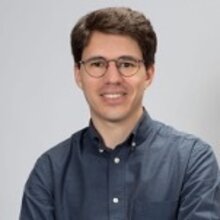
I'm a political economist interested in climate policy, business lobbying, and formal political theory. I'm from Argentina, where I studied math at the University of Buenos Aires. I'm finishing my PhD in political science at Harvard, and I will join Washington University in St Louis as an assistant professor right after the Summer Institute. Some things I'm interested in are how interest groups organize to influence policy, how that organization in turn shapes the kind of influence they exert, and how policy impacts their organization. Here by "organization" I mean tactical coalitions between interest groups, industry associations, and business groups, but this can also include unions and community organizations. I'm also interested in (green) industrial policy, both in terms of international coordination and in terms of the bureaucratic capacity needed to implement it successfully; also, government contracts, particularly the possibility of using NLP to study their design.
Soeren Henn
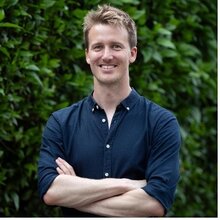
I am an economist and political scientist working on economic development and political economy in sub-Saharan Africa. I am currently an Assistant Professor in Political Science at the University of Wisconsin-Madison. I study the politics of development with a focus on fragile state settings, informal institutions, conflict, and the environment in Sub-Saharan Africa. With my research I try to understand what characterizes governance in fragile states and how it might be improved. Outside of work I love reading (everything from non-fiction, science-fiction, to novels), playing and watching sports, and eating and cooking food. I recently adopted a dog, so I currently talk way too much about him.
Jelani Ince
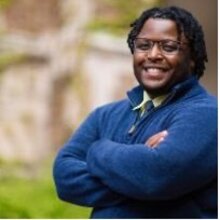
Jelani Ince is an Assistant Professor of Sociology at the University of Washington. He is an organizational ethnographer who uses participant observation and interviews to understand how organizational resource dependencies are leveraged to stymie racial diversity initiatives in non-profit organizations. Other research projects include investigating how contentious politics change public discourse about social inequality and influence donor funding priorities within social justice organizations. His research has received support from the Russell Sage Foundation, the Ford Foundation, and the Institute for Citizens and Scholars.
Joyce Kim
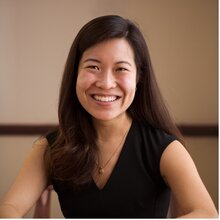
Hello! I am a PhD candidate in sociology and higher education at the University of Pennsylvania. My research examines processes and mechanisms of inequality and mobility in the college-to-career transition through a cultural and organizational lens. I primarily draw upon qualitative methods, especially ethnography and in-depth interviews. Before starting my PhD, I studied North Korean defectors’ civic adaptation, worked for a job skills training nonprofit, and conducted business school research. My eclectic post-undergraduate trajectory has undoubtedly shaped my current research interests. Outside of research, I enjoy running and traveling. Having grown up in a Korean immigrant family in Texas, I am also always on the lookout for great K-BBQ.
Alexander Kowalski
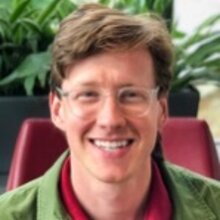
Alex Kowalski is an assistant professor in the Human Resource Studies department at Cornell's ILR School. He studies the consequences of passing business risk onto employees and whether employee participation and input can yield better quality jobs as well as improved organizational performance. His research is situated in the e-commerce and logistics industry. He also uses this setting to investigate how new automating technologies affect the content and experience of work. He received his PhD from MIT's Sloan School of Management, and he holds a Master’s in City Planning from UC-Berkeley. Before graduate school, he was an economics reporter for Bloomberg News.
Dylan Nelson

How can managers create shared value that improves organizational outcomes and boosts employee careers? I study how corporate reorganization, managerial practices, and employee involvement, impact workers' careers and well-being, as well as workplace productivity and culture. I started in 2024 as an Assistant Professor at the University of Illinois in Organizational Behavior at the Gies College of Business, following a PhD at Michigan and a sociologically flavored postdoc at MIT Sloan. I have multiple papers on leveraged buyouts and often use administrative data. For the CASBS summer camp, I am excited to discuss the matching of new/old organizational phenomena to new/old tools to explain them. I am generally interested in topics like the interplay of autonomy and structure in effective management, how political and social power shapes economic decisions, and how network methods could improve our understanding of labor market structure.
Gowun (Gonnie) Park

Gowun “Gonnie” Park is an Assistant Professor of Public Administration at the University of Hawai‘i at Mānoa. Her research primarily examines how institutional, community, and organizational dynamics shape the operational strategies, practices, and performance of nonprofits. She is also interested in the multifaceted roles nonprofits play within civic spaces, their collaboration across sectors with government and businesses, and the evaluation of nonprofit programs’ social impact in an increasingly marketized and volatile public sector, where cost-efficiency has become a dominant criterion. Currently, she is engaged in cross-country comparative research to explore the interconnected influences of how institutions, communities, and nonprofits across different contexts. Her work seeks to uncover how these dynamics signal shifting social demands, power structures, and the strategic responses of civic actors to those forces. Gonnie was a postdoctoral scholar at the Stanford Center on Philanthropy and Civil Society (Stanford PACS) after earning her Ph.D. in Public Policy and Management from the University of Washington in Seattle. She also holds a Master of Public Policy (M.P.P.) from the University of Chicago and a Master of Business Administration (M.B.A.) from Boston College.
Leandro “Leo” Pongeluppe
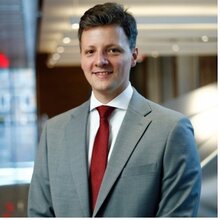
Leandro "Leo" Pongeluppe is a socio-environmental impact specialist, an assistant professor at the Wharton School, University of Pennsylvania, and currently a Leonard J. Horwitz Faculty Scholar. Leo holds a PhD from the Rotman School of Management, University of Toronto. His primary research interests are related to stakeholder management and socioeconomic development. Particularly, Leo is interested in understanding how organizations’ design and governance affect the achievement of the United Nations' Sustainable Development Goals (SDGs), such as poverty alleviation, environmental conservation, and healthcare. Leo uses mixed methods in his research, combining econometric causal inference methods with ethnographic techniques to analyze multifaceted problems related to socioeconomic development. Leo is currently performing research in settings such as the Brazilian favelas, the Amazon rainforest, worldwide desalination plants, and African HIV/AIDS treatment clinics.
Benjamin Rohr
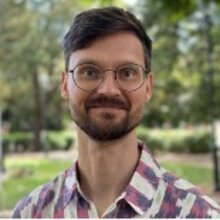
I received a PhD in sociology from the University of Chicago and am currently a Postdoctoral Researcher in the Department of Sociology at the University of Mannheim, Germany. As a political and historical sociologist, I use quantitative and computational methods to study the formation and transformation of political institutions. My research has examined state and party formation in the early American republic (1777-1820), elite recruitment into the American administrative state (1850–2000), organizational strategies and career mobility during China’s reform era (1978–2011), and political discourse in Renaissance Florence (1376–1378). I recently started a new project on parliamentary discourse and interactions among politicians and parties in the German parliament during the Weimar Republic (1920–1932).
Marcos Salgado

I am currently an assistant professor at FGV EPGE in Rio de Janeiro, Brazil. Previously, I was a PhD student in the Political Economy group at Stanford GSB (looking forward to being back!). Before that, I studied Economics and Political Science at the University of San Andres (in Argentina, where I am from). My fields of study are Political Economy, Economic History, and Organizational Economics. I’ve been studying the role of relationships in organizations such as the Spanish Empire in the 18th century and the Spanish Army in the 1936 coup. I’m expanding my research to principals in Brazilian schools.
Ritwika Sen

Ritwika Sen is an Assistant Professor of Economics at Ludwig Maximilian University of Munich. She is also a Visiting Scholar at the Global Poverty Research Lab, a CESifo Research Network Affiliate, and a member of the Collaborative Research Center on Rationality and Competition. Her research lies at the intersection of organizational and development economics. Ritwika earned a PhD in Managerial Economics and Strategy from Northwestern University's Kellogg School of Management in 2024. Before her PhD, she worked as a Country Economist for the International Growth Centre in Uganda and served as an Overseas Development Institute Fellow at Rwanda’s Ministry of Agriculture and Animal Resources.
Emily Tedards
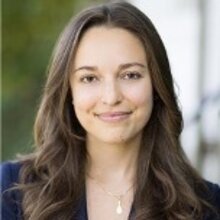
I’m a PhD student in Organizational Behavior at Harvard Business School and a Doctoral Fellow for the Reimagining the Economy Initiative at Harvard Kennedy School. My research lies at the intersection of organizational theory, sociology, strategy, and political economy. Specifically, I study interorganizational design, behavior, and effectiveness in various contexts to understand how business, government, and civil society actors address complex problems collectively. In my current projects, I ask: How do climate alliances drive business- and industry- level decarbonization? How do local economies recover from trade shocks? How do regions transform their energy systems? How do nations implement industrial policies? I approach these empirical questions (mostly) qualitatively, using ethnography, interviews, and historical methods. Before graduate school, I worked as a researcher for Harvard Business School, the United Nations, and several non-profits and think tanks in the U.S., U.K., Spain, and Colombia. I speak Spanish and am working on my French and German. On a typical day, you might find me triathlon training, cooking experimental meals for friends, or playing piano.
Benjamin Waldman
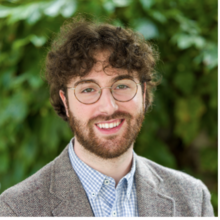
I am a PhD candidate in Government at Harvard University. My research concerns American political development, focusing on the growth of the administrative state from Reconstruction to the present. I use archival methods and network analysis to understand how state-building experiments have reshaped the contours of presidential power and redrawn lines of political accountability. One strand of my research foregrounds the relationship between popular claims-making and bureaucratic development, arguing that the accumulation of administrative power in the post-Civil War period emerged from grassroots demands for governmental action. A second set of my projects explores the transnational networks that undergirded bureaucratic development in the twentieth century, linking the presidentialization of American politics to broader intellectual and institutional currents in the midcentury Atlantic world. Before starting my PhD, I worked at the Brennan Center for Justice as a researcher specializing in presidential emergency powers. Originally from New England, I like to hike, play tennis, and bake desserts. I’m excited to meet the other CASBS participants come July!
Organizers
Bob Gibbons
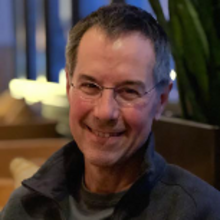
I guess I am an organizational economist. I certainly am interested in organizations, as well as in interactions that are organized (even if not within a single organization). And I use game theory to guide my thinking, so that must be related to economics; on the other hand, it has been so long since I have drawn supply and demand curves that I truly can neither recall nor deduce whether price or quantity goes on the x-axis of such graphs! I am tempted to say that what I am interested in is “visible hands” (Chandler, 1977), but I’m not sure I could define that term, except to say that I am not interested in the invisible hand. Another description I sometimes use is that I wake up asking “What can an economist do to help a fixed set of people (or entities) collaborate?” In 2014, at a lunch table on the CASBS patio, my friend Steve Barley (a sociologist) heard me ask that and answered “An economist cannot do any such thing and so should leave!” Still, here I am.
Woody Powell
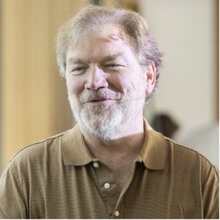
I am a sociologist by training and mostly continue to identify as one. I work on networks and on institutions, though when I hang out with network people, I wonder where the culture is, and when I hang out with institutions folks, I start freaking out about the absence of relationships. I have been teaching at Stanford for 26 years. Before that I was at U. of Arizona, MIT, and Yale. Bob and I have been orchestrating the summer institute since 2016, and it has been one of the most rewarding experiences of our careers. We get to meet and learn from remarkable young scholars, and we invite a new cast of guest chefs every year. My hobbies include collecting antique maps that disrupt our sensibilities about nations and borders. You can see two great ones in my study, #13, this summer.