Mariano-Florentino Cuéllar to return to Stanford
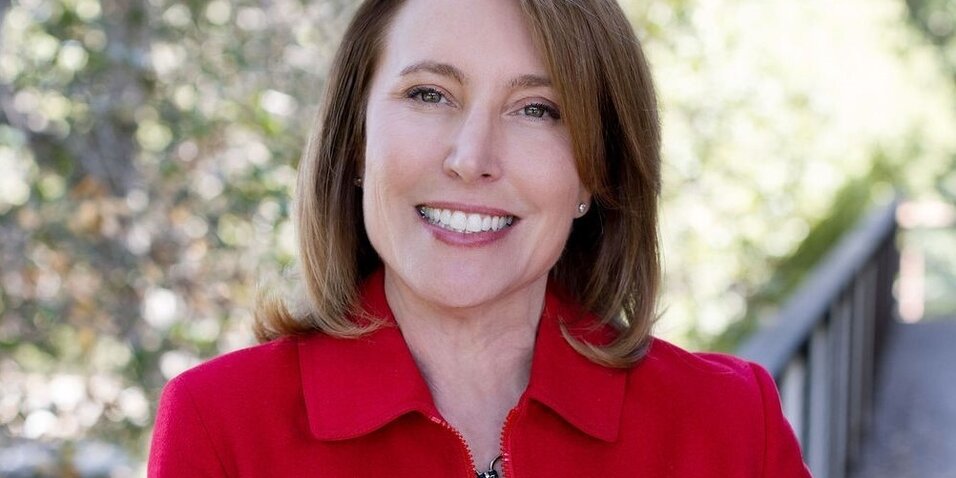
Mariano-Florentino “Tino” Cuéllar, a former justice of the Supreme Court of California and a nationally recognized leader in higher education, public service, and international affairs, will return to Stanford University this summer, rejoining the faculty at Stanford Law School and taking on two senior leadership roles.

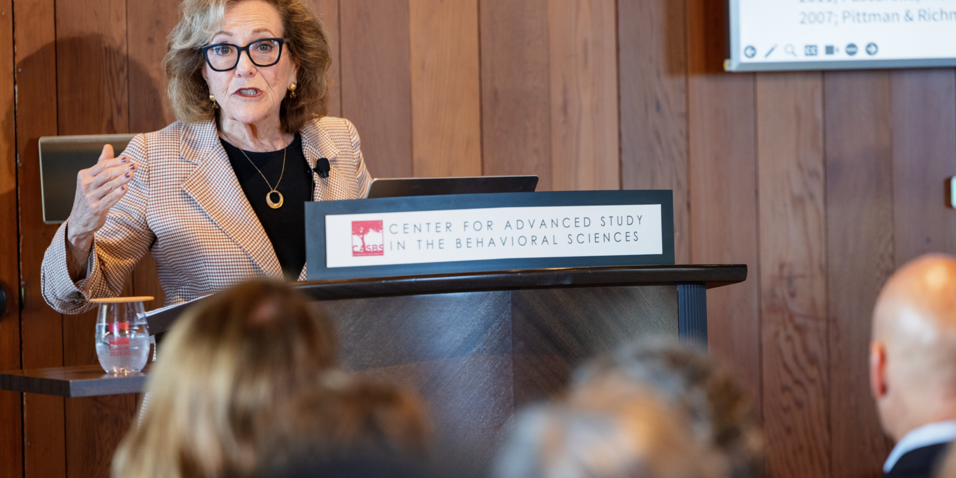
Cuéllar has been named the next Sara Miller McCune Director of the Center for Advanced Study in the Behavioral Sciences (CASBS), succeeding interim director Lara Tiedens. He will also serve as the Shriram Family Director of the Knight-Hennessy Scholars (KHS), succeeding President Emeritus John L. Hennessy, who has led the program since founding it in 2016. He will also have a courtesy appointment in political science.
“From administrative law to health policy to the governance of artificial intelligence, the depth and breadth of Tino’s scholarship speaks to his eternally curious mind,” said Stanford Provost Jenny Martinez. “He has been a transformative leader of institutions at Stanford and beyond. I’m thrilled that he will be the next head of CASBS and KHS – two communities of scholars similarly dedicated to the power of collaboration in pursuit of knowledge.”
Cuéllar comes to Stanford from the Carnegie Endowment for International Peace, a global institution founded in 1910 by Andrew Carnegie to support diplomacy and advise policymakers on international conflict and governance, where he has served as its president since 2021.
“Returning to Stanford at this juncture is an enormous honor – the place has long been pivotal in my life and embodies values I admire,” Cuéllar said. “Here, we have an extraordinary opportunity to advance the frontiers of knowledge and prepare leaders to take on today’s most urgent challenges while strengthening the longer-term foundations for a better future.”
Advancing interdisciplinary research at CASBS
Founded in 1954 to advance knowledge of human behavior to serve humanity, CASBS has hosted 31 Nobel laureates, 52 MacArthur Fellows, and luminaries such as philosophers John Rawls and Robert Nozick, historian of science Thomas Kuhn, and U.S. Supreme Court Justice Ruth Bader Ginsburg. Scholars associated with CASBS have played formative roles in their fields.
Cuéllar is already deeply familiar with CASBS, having served as the chair of its board of directors from 2016 to 2021. As director, he will lead the Center’s new efforts to apply emerging knowledge to major societal challenges as well as its renowned residential fellowship program, which brings scholars from across disciplines to advance understanding of human behavior, institutions, and society.
“Tino Cuéllar has a keen understanding of what it takes to nurture the kind of stellar interdisciplinary research that CASBS is known for,” said Stanford Vice Provost and Dean of Research David Studdert. “As a leader, he has experience creating those conditions, and as a scholar, he has benefited from them.”
“The opportunity is to challenge boundaries and hidden assumptions, connecting curiosity-driven research to the most daunting and complex problems the world is facing,” Cuéllar said. “As we bring its model fully into the 21st century, CASBS has the location, the history, and the ambition to ask big, cross-cutting questions – from how to make democracy more resilient to how a world of fraying ties, both social and geopolitical, can manage to stay connected as it evolves."
That vision, said CASBS Board Chair Abby Rumsey, builds directly on the center’s legacy while positioning it for its next chapter.
“Tino Cuéllar returns to CASBS with a clear vision for how the social sciences will engage with powerful technologies such as AI and bioengineering, technologies that challenge the very notion of the human,” Rumsey said.
Guiding future leaders
As the director of KHS, Stanford’s flagship graduate fellowship program, Cuéllar will help guide a vibrant community of scholars from across Stanford’s seven schools dedicated to making a difference in the world through purposeful leadership and a civic-minded approach.
Voicing his support for Cuéllar, Hennessy said: “Having devoted almost 10 years to the creation and development of Knight-Hennessy Scholars, it was critical that we find the right person for this role. Tino’s values and his experiences in government, academia, and working on global issues make him the ideal choice to lead Knight-Hennessy as it enters its second decade.” Hennessy will continue as a faculty member, including advising and working with KHS scholars.
Knight-Hennessy Scholars provides students with up to three years of financial support to pursue graduate studies at Stanford while engaging in experiences that prepare them for leadership roles in academia, industry, government, nonprofits, and the community at large.
For Cuéllar, the program represents a long-term investment in people who can translate knowledge into action.
“The university and its allies have made a giant investment in bringing promising future leaders to Stanford from across the globe to give them a world-class education so they can help build a future better for everyone,” Cuéllar said. “I look forward to taking an already great program and strengthening its capacity to be a preeminent leadership international development venture, where scholars hone their ability to keep the world innovative, principled, and connected.”
That emphasis, Cuéllar added, aligns closely with his vision for CASBS.
“In one institution, leading scholars are shaping the ideas and challenges that help us understand the future,” Cuéllar said. “In another, we’re training people who will spend their careers working on those problems. Both are about building a better world with the right knowledge and values.”
A widely respected campus figure
Born in Matamoros, Mexico, Cuéllar moved to California with his family at the age of 14 and became a naturalized U.S. citizen at the age of 21.
Cuéllar’s experience growing up along the U.S.-Mexico border profoundly shaped his worldview on what it means for all people to thrive and build a better life for themselves, their families, and their communities.
After earning a bachelor’s degree from Harvard and a law degree from Yale, he earned a doctorate in political science from Stanford in 2000. He joined the Stanford faculty from 2001 to 2015, where he was the Stanley Morrison Professor of Law and a professor, by courtesy, of political science in the School of Humanities and Sciences (H&S).
During that time, he served as director of the Freeman Spogli Institute for International Studies, where he launched initiatives on global poverty and cybersecurity, and co-directed the Center for International Security and Cooperation. Cuéllar also chaired the board for the Institute for Innovation in Developing Economies at the Graduate School of Business.
In 2015, he was appointed as a justice to the California Supreme Court, becoming the first immigrant from Latin America to serve as a justice. During his nearly seven years on the bench, he continued to teach at SLS as the Herman Phleger Visiting Professor and was affiliated with the Stanford Institute for Human-Centered Artificial Intelligence.
Dean of Stanford Law School George Triantis, a longtime colleague, praised his return: “Tino Cuéllar has been a beloved teacher and mentor to hundreds of students, both before leaving the Law School for the California Supreme Court and since then. He has an extraordinary and unique record of accomplishment as a widely-cited legal scholar and jurist. It is hard to overstate the enthusiasm with which the law faculty anticipates his return.”

Experience at the intersection of knowledge and action
Across his career, Cuéllar has taken leaves from academia to serve in three U.S. presidential administrations and in senior advisory roles, including on the President’s Intelligence Advisory Board and the U.S. Department of State’s Foreign Affairs Policy Board. He has also served as an official at the White House Domestic Policy Council and was co-chair of the bipartisan Belfer Center-Carnegie-Nuclear Threat Initiative Task Force on Nuclear Proliferation and American Security.
Most recently, his scholarship has examined how governing institutions evolve in response to domestic and international pressures and the impact of artificial intelligence on organizations, including problems of liability and governance, decision-making norms, innovation, and risk.
At the request of the Governor of California, Gavin Newsom, Cuéllar served on the Joint California Policy Working Group on AI Frontier Models, working alongside the founding co-director of Stanford’s Human-Centered AI Institute, Fei Fei Li, and Jennifer Chayes, professor and dean of UC Berkeley’s College of Computing, Data Science, and Society. The group’s 2025 report informed California Senate Bill 53 (SB 53), the Transparency in Frontier Artificial Intelligence Act (TFAIA), which establishes safety, transparency, and reporting requirements for advanced AI systems.
Cuéllar currently chairs the board of the William & Flora Hewlett Foundation and is a member of the Harvard Corporation. He is also a member of the American Academy of Arts and Sciences.
Reflecting on his decade away from Stanford, Cuéllar said his time in government, the courts, and global institutions sharpened his appreciation for universities.
“Top research universities live in a productive tension,” he said. “They must connect to the world to prove their relevance, but they also have to protect a distinctive space where knowledge can be pursued for its own sake. Nurturing that setting is a major investment in long-term human progress – something I value even more deeply now.”
Article reposted with permission of Stanford News. View the original article on the Stanford News website.