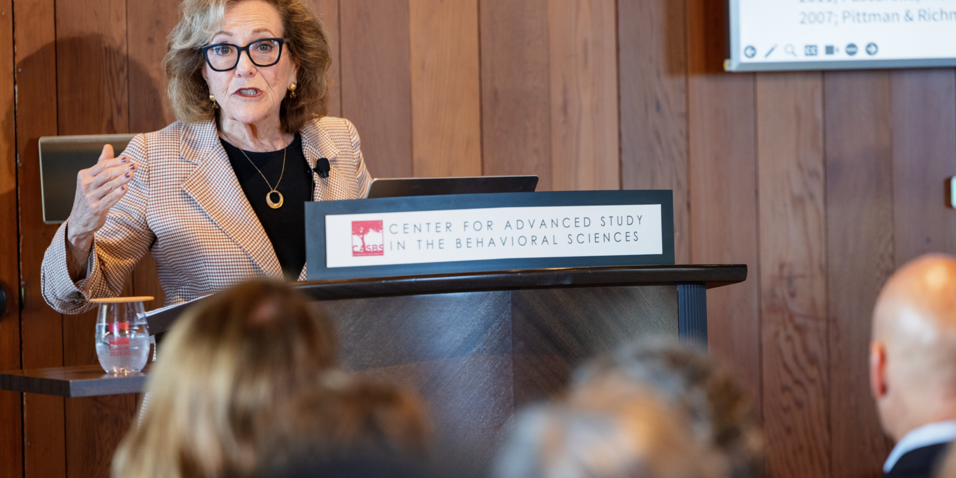
Nasandratra Ravonjiarison conducts research at the intersection of environmental science, soil sciences, agriculture, and social systems. Her work draws on years of direct field engagement with smallholder farming communities in Madagascar, where agricultural systems face significant environmental and socio-economic challenges. It explores how context-specific indigenous knowledge and scientific practices can be combined to inform sustainable solutions. As a scholar from Madagascar, Nasandratra brings a rarely heard perspective to the CASBS landscape as a 2025-26 fellow. Likewise, the Center’s cross-disciplinary ethos, manifested in each year’s class of social and behavioral scientists, has myriad ways of influencing the perspectives and informing the work of those selected to spend an academic year in residence.
We conducted an extended Q&A with Nasandratra to learn more about her work, her CASBS experience, and any cross-fertilization occurring between the two.
CASBS: Where in Madagascar did you grow up and how does that inform the area of research you decided to pursue?
Nasandratra Ravonjiarison: I grew up in Madagascar’s Central Highlands, a vast elevated region located in the heart of the island. Madagascar is about 1.4 times larger than California, and its ecological diversity is remarkable. The Central Highlands sit roughly 800 to 1,500 meters above sea level and are characterized by red soils, terraced hillsides, and predominantly smallholder farming systems. Although I lived in town during the school year, I spent my school holidays with my grandparents, who were farmers. Those periods were formative. I witnessed firsthand the challenges they faced, like the uncertainty of rainfall, the physical demands of soil preparation, and the constant effort required to manage limited resources.
These experiences shaped the questions that later guided my academic path. My doctoral research at Laboratoire des Radioisotopes (LRI), Antananarivo University in Madagascar began with a central recognition that farmers possessed deep, place-based knowledge of their land and understanding of soil variations, seasonal shifts, and crop behavior. I came to understand that this knowledge is site-specific, generational, and socially validated through practice, even if it is not always formally acknowledged. My current work builds on that foundation by moving from recognition to systematic integration. It focuses on how farmer knowledge can be more effectively combined with soil science to co-design sustainable fertility management strategies in Madagascar. From there, my work has expanded to ask broader questions: How can scientific expertise and farmers’ knowledge be brought into meaningful dialogue? How can agricultural innovation be both technically rigorous and socially legitimate? I now situate this research within wider discussions of climate adaptation and knowledge governance, examining how collaborative research models can strengthen both resilience and equity in agricultural systems, particularly by recognizing farmers as knowledge holders, supporting more inclusive decision-making, and ensuring that innovations are accessible, relevant, and beneficial to those most directly affected.
![Photo of Nasandratra Ravonjiarison [CASBS files]](/sites/default/files/styles/large/public/media/image/ravonjiarison_nasandratra_800_0.png?itok=mzc6Txr_)
CASBS: What are the principal crops of Madagascar’s Central Highlands? To what extent have climate change and sustainability imperatives impacted agriculture in Madagascar?
NR: Rice is the dominant staple crop, along with maize, beans, potatoes, sweet potatoes, and various horticultural crops for local markets. I do not focus on a single crop, as my work addresses agricultural systems more broadly, especially soil fertility, adaptation strategies, and knowledge integration across farming practices. However, in our recent INNOV’EARTH project [described further below], conducted with a multidisciplinary team of researchers in close collaboration with farmers, we worked specifically on rainfed rice systems, which are especially sensitive to rainfall variability and soil management challenges. Rice remains central not only economically but culturally, and most smallholder households depend on it for both subsistence and income. Farming systems are typically small-scale and labor-intensive, with limited mechanization and heavy reliance on rainfall.
Climate variability has increasingly affected agricultural stability in recent years. Farmers report shifts in rainfall patterns, shorter or less predictable rainy seasons, more frequent drought episodes, and occasional intense rainfall events that contribute to erosion. These changes often appear as growing unpredictability rather than sudden shocks, making agricultural planning more difficult.
In response, many farmers are adapting incrementally. Some diversify crops, adjust planting calendars, experiment with organic amendments, or modify water management practices. At the same time, structural constraints impact the scale of adaptation. Limited access to irrigation infrastructure, soil testing facilities, credit systems, and agricultural extension services reduces farmers’ ability to invest in long-term resilience.
In some cases, coping strategies may unintentionally exacerbate environmental pressures, such as expanding cultivation onto marginal lands or shortening fallow periods. These are often responses to economic constraints rather than deliberate environmental decisions. Sustainability imperatives intersect with economic vulnerability.
CASBS: Describe an example of specific interventions and methods you have employed while conducting your field work, and the results they have helped facilitate.
NR: One component of my fieldwork focuses on designing and testing soil fertility interventions in close collaboration with smallholder farmers, multidisciplinary teams of researchers, extension agents, and NGOs.
A recent example is the INNOV’EARTH project (2022–2024), a research-action initiative in which I contributed as part of a broader collaborative effort. The project explored the co-design of vermicompost-based fertilization strategies for upland rice systems in Madagascar’s Central Highlands, where soils are generally nutrient-poor and access to quality organic inputs is limited. (Vermicompost is produced through the biological transformation of organic waste by earthworms. It improves nutrient availability, soil structure, and moisture retention.)
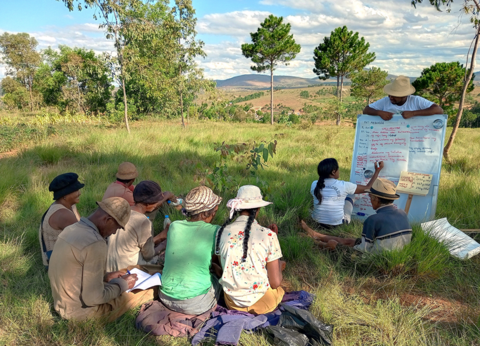
Rather than introducing predefined solutions, we followed a structured participatory co-design process organized in several steps. First, we selected a group of reference farms, whose farmers became active partners in the research. Second, we conducted surveys to understand how they currently manage soil fertility, which revealed that they rely on combinations of locally available resources rather than single inputs. Third, vermicomposting was introduced through training as an additional option, not as a replacement for existing practices. Fourth, a co-design workshop brought together farmers, researchers, and other stakeholders to jointly develop fertilization strategies that reflected different priorities, including productivity, feasibility, and long-term sustainability. Fifth, these strategies were tested through on-farm experimentation using paired plots, comparing farmers’ usual practices with the co-designed approaches under the same conditions. Sixth, the plots were jointly monitored and evaluated throughout the growing season, combining agronomic observations with farmers’ own criteria. Finally, the process concluded with collective discussions to reflect on the outcomes and identify possible adjustments for future cycles.
While detailed results are part of ongoing collaborative analyses, initial observations suggest improvements in soil conditions and crop performance in some cases, alongside important considerations related to feasibility. Overall, this process illustrates how interventions can be developed and assessed through iterative collaboration, highlighting the value of context-specific, co-designed approaches that integrate scientific and local knowledge in soil fertility management.
CASBS: Your work in service of agricultural development and productivity in Madagascar incorporates available science, both agricultural and environmental. That’s one knowledge stream. As you describe above, your work also involves “co-designing” with smallholder farmers and the (context-specific) knowledge and expertise they possess on their terms. Tell us more about the “co-design approach.
NR: Over the past five years, my research program has focused on developing structured methods to integrate farmer knowledge and scientific research in agricultural systems. Rather than treating farmers as beneficiaries of innovation, I approach them as co-producers of knowledge. My work has centered on soil fertility management, climate adaptation, and the design of collaborative agricultural research models in Madagascar’s Central Highlands with NGOs and other research organizations.
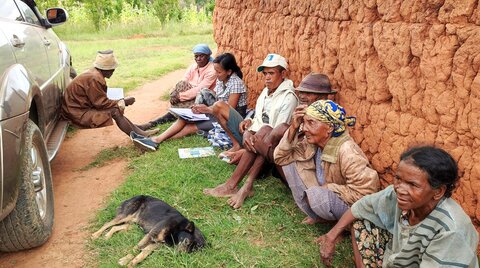
Methodologically, this work is grounded in participatory action research. In practical terms, this is not simply consultation or data collection from farmers. It is a collaborative process in which researchers and farmers jointly define problems, co-design experiments, test practices in real-world conditions, and evaluate results together. The goal is not only to generate scientific findings, but also to build locally legitimate and practically viable solutions.
In our projects, this begins with knowledge-mapping workshops, where farmers articulate their existing practices, constraints, and success criteria. Rather than imposing predefined research questions, we identify shared problems, such as declining soil fertility or rainfall variability, and then co-design experimental strategies. For example, in recent work on rainfed rice systems, farmers and researchers jointly developed soil fertility treatments that combined locally available organic inputs with soil science analysis. Each participating farmer established paired plots – one reflecting traditional practice and one testing the co-designed approach, allowing side-by-side comparison under real farming conditions.
Evaluation is equally collaborative. We combine agronomic indicators (soil organic matter, yield, nutrient balance) with farmer-defined measures such as labor demands, cost, risk, and perceived sustainability. In this way, participatory action research becomes both a methodological framework and an intervention with our partner organizations. It shifts authority from a one-directional model of knowledge transfer toward shared decision-making.
Importantly, this approach does not romanticize local knowledge nor reject scientific expertise. Rather, it seeks to structure a dialogue in which both knowledge streams retain their integrity while contributing to more resilient and socially legitimate forms of agricultural innovation.
CASBS: You mentioned participating farmers establishing paired plots – one reflecting traditional practice and one testing the co-designed approach – to allow side-by-side comparison. Are there instances when comparisons reveal unanticipated results? During your CASBS research seminar in April 2026, some questions after your presentation related to potential tensions between science-based approaches and traditional approaches.
NR: This collaborative work is ongoing with results still under analysis, but I can share a few thoughts. We do not observe a single approach consistently outperforming others across all contexts. What we advanced is that approaches emerging from co-design, however, tend to provide a more balanced outcome, as they combine elements of both and are better aligned with real-world conditions of use.
We haven’t explored comparisons that go beyond a simple binary — for example, to also consider externally designed interventions in addition to farmer practices and co-designed options. But the comparisons we have performed further reinforce that performance cannot be reduced to yield alone; feasibility, labor requirements, input access, and perceived risk all shape outcomes and adoption.
Regarding potential tensions between approaches, we did not observe explicit tensions during the two-year process. The co-design setting created a space for dialogue, where different forms of knowledge were not positioned in opposition but rather discussed and combined. In that sense, what is often described as “tension” may emerge less from the knowledge systems themselves, and more from how solutions are introduced or imposed.
This is where co-design becomes particularly relevant. The question is not only which option performs best under controlled or short-term conditions, but which one is workable, acceptable, and sustainable in practice. Even when a science-based approach shows strong potential in terms of productivity, it may not be adopted if it does not align with farmers’ capacities or constraints.
Co-design does not assume that one approach will always be superior. Rather, it creates a space to test, adapt, and combine different forms of knowledge. In many cases, the most effective solutions are not purely “traditional” or purely “scientific,” but hybrid and context-specific. The value of the approach lies in this capacity to navigate complexity and support solutions that are both technically sound and socially grounded.
CASBS: How does your research approach move beyond local agricultural practice to inform broader climate adaptation or development policy debates?
NR: The research addresses a broader challenge that appears across policy domains: why well-supported scientific solutions often struggle to gain traction on the ground. In the communities where I work, I have observed that resistance is rarely about rejecting science itself. More often, it reflects a mismatch between expert-driven recommendations and the lived realities, constraints, and decision-making frameworks of those expected to implement them. When innovation is introduced as prescription, it tends to stall; when it is shaped through dialogue, it tends to become actionable.
This insight has direct implications for climate adaptation and development policy. The issue is not only what solutions are proposed, but how they are developed and implemented. My research demonstrates that when farmers are involved in defining problems, testing solutions, and interpreting outcomes, adoption improves and practices become more durable. Scientific rigor is preserved, while legitimacy and ownership are strengthened.
This also raises a broader question: to what extent is such an approach transferable or scalable beyond the contexts in which it was developed?
Rather than being transferable as a fixed set of technical solutions, the approach is transferable as a process. Its value lies in a structured way of organizing collaboration between different knowledge systems. In that sense, scalability does not mean replication, but the ability to apply similar principles, co-definition of problems, joint experimentation, and collective evaluation across different environmental, institutional, and socio-economic settings.
This makes the approach broadly applicable to contexts where similar challenges arise in translating scientific knowledge into practice.
The contribution of this work is therefore relational as much as technical. The key policy question shifts from “What solution should be deployed?” to “How should adaptation processes be structured so that they are both scientifically sound and socially grounded?” This governance-oriented perspective extends beyond agriculture in Madagascar, informing broader debates in climate policy, sustainable development, and even public health, wherever tensions emerge between expert authority and everyday experience.
In this sense, my work contributes to a scalable model of co-production that strengthens evidence-based policy by redesigning how expertise is communicated, negotiated, and implemented. The work lies not in exporting solutions, but in providing a framework for designing context-specific innovations that can be sustained over time.
CASBS: You’re invoking things like institutions, governance, social-groundedness. It’s along these dimensions where a place like CASBS can be a great resource. Your CASBS bio-sketch, in fact, notes your plan to “leverage interdisciplinary exchanges…and collaborative dialogues to foster innovative, sustainable agricultural practices...” Before you arrived at CASBS, what did you expect to gain from exchanges with various social and behavioral scientists? Were you interested in insights from any specific disciplines (psychology, anthropology, economics, sociology, etc.)? How has your experience here benefited from those interdisciplinary exchanges?
NR: Before arriving at CASBS, I was already working at the intersection of agronomy and participatory field research. However, I felt that my framework required deeper engagement with social and behavioral science theories. I came hoping to better understand not only how co-design works in practice, but why expertise sometimes divides rather than unites communities.
I was particularly interested in anthropology and sociology, especially questions surrounding epistemic authority and the social construction of expertise. Political science and governance theories also felt important because of the relational aspects of agricultural innovation. From psychology and behavioral sciences in general, I was curious about how trust, perceived legitimacy, and lived experience shape the reception of expert recommendations.
Field experiences in Madagascar had already shown me that resistance to expert advice is rarely about ignorance. Rather, it often reflects a misalignment between expert-driven prescriptions and lived realities. In one case, for example, a female farmer was eager to adopt vermicomposting after learning about its scientific benefits but faced economic constraints that made the standard technical recommendation unrealistic.
At CASBS, interdisciplinary exchanges have helped me reinterpret such cases through a broader analytical lens. Conversations with fellows working on collective action, institutional trust, and behavioral norms have allowed me to move from describing these situations to analyzing them more systematically. The innovation mentioned above only succeeded once it was adapted collaboratively to the female farmer’s context. That moment revealed something deeper: expertise becomes effective when it is negotiated and co-produced, not simply delivered.
These exchanges have also pushed me to engage more explicitly with concepts such as legitimacy, authority, and coordination across scales. For instance, discussions with scholars in political science and economics have helped me think about how institutional arrangements shape whose knowledge counts, while interactions with anthropologists have deepened my understanding of how knowledge is socially validated in practice.
Such considerations have directly reshaped how I interpret the results of projects like INNOV’EARTH. Measurable agronomic improvements (soil moisture retention, yield increases) are important. But the more transformative result may be structural: co-production alters the relationships among knowledge holders as well as among all stakeholders in general.
Compared to my fellowship experience at the Stellenbosch Institute for Advanced Study (STIAS) in 2022, which helped me refine my empirical and experimental design as well as operational model, CASBS has pushed me to interrogate the broader implications of that design. It has encouraged me to frame my work not only in terms of agricultural outcomes, but also in terms of governance processes – examining what co-design implies about power, legitimacy, and authority in innovation systems. This includes how authority over knowledge is distributed between scientific experts and practitioners, how different forms of knowledge become recognized as legitimate, and how participatory processes can reshape decision-making in agricultural adaptation by enabling the co-production of solutions grounded in both scientific and experiential knowledge.
These reflections resonate with my recent talk at a Stanford Graduate School of Business environmental justice conference, where I explored how co-design approaches can redistribute authority in agricultural innovation and integrate farmers’ knowledge into climate adaptation strategies.
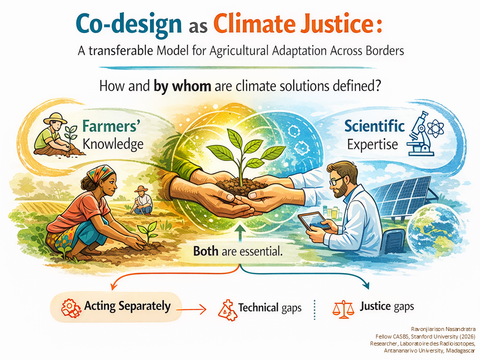
CASBS has helped me see participatory action research not only as a field methodology, but as a framework for rethinking how expertise circulates and becomes socially effective.
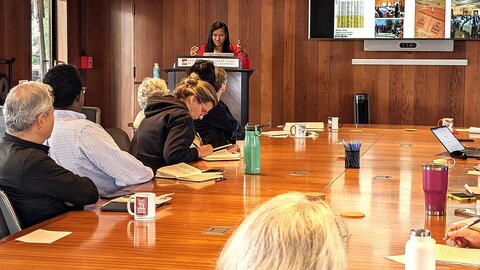
CASBS: We touched upon your CASBS fellows research seminar. It’s the only thing (besides attending lunch) that we require fellows to do. Did anything else strike you about your seminar? Any notable takeaways?
What struck me was that many of the questions from fellows did not focus only on the technical intervention itself, but on the social conditions around it. Some asked about variation among farmers whether gender, age, education, or degree of engagement shaped how the intervention was received. That pushed me to think more carefully about heterogeneity within farming communities, and also about the contrast between analyzing farmers as individuals and understanding decision-making at the household level. Other questions focused on the scientists themselves: who they were, how they listened, whether they changed their views after encountering local realities, and whether they received any preparation for that kind of reciprocal exchange. Those questions made me reflect more explicitly on co-design as a two-way process of learning rather than a one-way transfer of expertise.
I was also struck by questions about trust, personal connection, and legitimacy. Some fellows asked whether what mattered was not only shared knowledge, but also whether farmers felt respected, whether the process created better communication among farmers themselves, and whether people were responding to the method or to particular individuals. Others raised questions about disagreement, cognitive consensus, and whether scientific and local knowledge should be understood as complementary or substitutive. These exchanges helped me move beyond seeing co-design mainly as a participatory methodology. They encouraged me to see it more clearly as a social and relational process shaped by credibility, recognition, mediation, and the conditions under which different forms of knowledge become legitimate.
The seminar also broadened the scale at which I think about my work. Fellows asked about the role of NGOs, local government, land tenure, corporations, and long-term institutionalization. That was especially valuable because it pushed me to connect field-level collaboration to broader governance questions: not only whether a practice works agronomically, but how it can be sustained, transmitted, and embedded in institutions over time. In that sense, CASBS has helped me frame my work not only in terms of agricultural outcomes, but also in terms of governance processes, how authority over knowledge is distributed, how legitimacy is constructed, and how collaborative models can reshape decision-making in agricultural adaptation.
CASBS: How do you situate your research in the broader context of interconnected issues and problems (and among other scholars in Madagascar tackling those issues and problems) that appear to confront Madagascar? For example, interconnections among climate change, deforestation/soil erosion, food insecurity, biodiversity loss, poverty, and (in some instances) weak governance. How do you think about your work and expertise in relation to others (in Madagascar) who possess expertise in areas different from yours, and how the (hopefully) complementary approaches can or are making a difference for people and communities in Madagascar?
NR: Madagascar indeed faces deeply interconnected challenges. Climate variability intensifies soil erosion; deforestation affects hydrological systems; food insecurity intersects with poverty; biodiversity loss is linked to agricultural expansion; and governance capacity varies across regions. These are not isolated problems but mutually reinforcing dynamics. And then there’s the under-resourced agricultural infrastructure. Irrigation networks are uneven, research-to-farmer linkages are fragmented, and rural infrastructure such as roads and storage systems can be unreliable.
My work addresses only one component of this system: the interface between soil health, agricultural resilience, and knowledge governance. I do not approach this as a comprehensive solution, but as a strategic entry point. Soil fertility is not merely an agronomic issue; it influences productivity, land pressure, forest encroachment, and household stability. Strengthening resilience at the farm level can, over time, reduce pressure on marginal lands and contribute indirectly to broader ecological stability.
Meaningful impact requires collaboration beyond my field. In Madagascar, I work alongside researchers in forestry, biodiversity conservation, rural economics, and governance, where different approaches, ranging from landscape conservation to market systems and institutional reforms, remain complementary. Agricultural resilience, forest conservation, and governance cannot succeed in isolation.
Within this landscape, I see my role not only as developing participatory soil management strategies, but also as building bridges across disciplinary silos. Co-design methodologies can act as connective tissue, linking agronomy with social science, and local practices with broader policy conversations.
No single researcher can resolve the structural challenges Madagascar faces. However, collaborative and complementary approaches can shift trajectories incrementally. In that sense, my work contributes as one strand within a broader network of efforts aimed at strengthening farmer agency, improving soil systems, and advancing resilience and sustainability.
Ultimately, the question is not whether one intervention can solve interconnected crises, but whether institutions and scholars are willing to coordinate across scales and disciplines. That coordination, I believe, is where long-term transformation becomes possible.
CASBS: Tell us one or two things about Madagascar that readers likely don’t know but should.
NR: A couple of things immediately come to mind when we talk about Madagascar.
First, while Madagascar is globally recognized for its extraordinary biodiversity, less attention is given to the human dimension of its environmental landscape. Much of the population depends directly on smallholder agriculture, often under conditions of environmental fragility and limited infrastructure. Climate vulnerability in Madagascar is not an abstract future risk; it is a lived and ongoing reality. Understanding the country therefore requires seeing ecological and social systems as deeply intertwined.
Second, Madagascar is frequently portrayed as isolated or peripheral. Yet historically and culturally, it is profoundly connected. Its population reflects Austronesian, African, and Arab influences, and its agricultural systems represent centuries of adaptation and experimentation. Farmers are not simply managing land; they are sustaining knowledge traditions that are both generational and adaptive. Recognizing this complexity challenges simplified narratives of “underdevelopment” and invites a more respectful understanding of local expertise and resilience.
CASBS: You didn’t come to CASBS alone. Tell us about your and your family’s life experience while living in the Stanford area. Has anything surprised or struck you?
NR: Coming to CASBS was not only a professional transition but also a family experience. Relocating to the Stanford area meant adapting together, to a new environment, new rhythms, and a different cultural landscape.
I came here with my husband and our son, who was six when we arrived and is now almost seven. Before coming to CASBS, he spoke two languages (a Malagasy dialect and French), which he learned at school. To prepare for the move, I enrolled him in two months of English lessons. He arrived in California with a few basic English words and a great deal of curiosity.
The first weeks were not easy. After a short time at school in the United States, he told me he did not want to go back because he did not understand anything. Yet, just two months later, something remarkable happened. He began speaking confidently, picking up expressions and everyday language with impressive ease. Now he comes home each day with a new English word, and in many ways, he has become our teacher about life the U.S.
The physical distance between California and Madagascar, roughly 32 hours of travel, makes the move feel even more significant. The cultural distance, however, has often felt smaller than expected. Still, one recurring experience has struck us. Very often, when meeting people for the first time here, we hear: “You are the first Malagasy person I have ever met.” That simple sentence is both surprising and revealing. It reminds me how geographically distant and little-known Madagascar can be in some contexts.
For that reason, before many of my talks, I take a few minutes to introduce Madagascar, its geography, its agricultural systems, and its social complexity. In some sense, being at CASBS has meant not only representing my research but also giving voice to a context that is rarely present in global academic conversations. Perhaps that is part of what has made this year meaningful: contributing what might be considered a “rare voice” within this space. At CASBS, I feel I’m representing not only my country, but a whole continent, all of Africa.
That awareness also carries a sense of responsibility. Sharing to all (that rare voice…) is not only about visibility, but about connection. If it can inspire even a few young Malagasy or African researchers to imagine themselves in similar academic spaces, then that visibility becomes meaningful. At the same time, it is an opportunity to share the work I am doing and the collaborative models behind it, beyond disciplinary and geographic boundaries.
For my family, the diversity of the Bay Area has also been meaningful. Hearing multiple languages in public spaces and experiencing a culturally plural environment has made adaptation feel less like rupture and more like expansion.
Overall, this year has been not only an academic fellowship for me but a shared family chapter of adaptation, learning, discovering and perspective.
Q&A conducted by Mike Gaetani