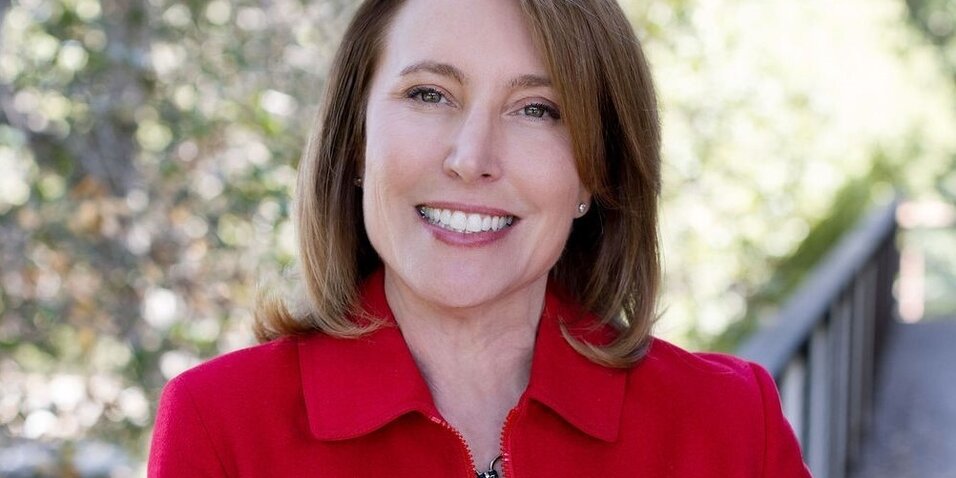
Hazel Rose Markus likes to tell a story about a transformative moment that occurred during the first of her three CASBS fellowships, in the 1980-81 academic year. At a meeting of a working group on the social psychology of stigma, of which she was a project member, Markus gave a presentation on how schemas of the self shape behavior. After listening attentively, another 1980-81 CASBS fellow, anthropologist Bruce Kapferer, known for his work in Sri Lanka, Zambia, and his native country, Australia, told Markus that her analysis was very…American.
“I didn’t know what to make of it at the time,” she said, “but I knew it wasn’t a compliment. And I never forgot it. And long story short, much of my work since then has been realizing what he meant and that he was right.”
Hazel Rose Markus, the Davis-Brack Professor in the Behavioral Sciences at Stanford University, told the story again on May 7, 2026. And fittingly, she told it at CASBS. Even more fittingly, she told it publicly before an audience gathered to celebrate her career accomplishments – most notably among those accomplishments, her pioneering work advancing the field known as cultural psychology – as part of her 2026 Sage-CASBS Award Lecture on “The Hidden Power of Cultural Defaults.”
In March 2026, CASBS and its partner, Sage Publishing, announced Markus as the tenth winner of the Sage-CASBS Award, established in 2013 to recognize outstanding achievements in the social and behavioral sciences and their role in advancing public discourse, public policy, and good governance. By tradition, each winner delivers a public lecture at CASBS, with Sage as co-presenter.
View a photo gallery from the 2026 Sage-CASBS Award Lecture
Evidently, Markus took that early-career lesson seriously. By the time Lara Tiedens, the Sara Miller McCune Interim Director of CASBS, took a graduate-level social psychology class Markus taught at the University of Michigan in the early-to-mid-1990s, Markus, through her instruction and analysis, in Tiedens’s recollection, demonstrated great sensitivity to those communities that often are unseen, unrecognized, or barely known.
“I really see this as a hallmark of Hazel’s work and contributions,” noted Tiedens in her introduction of Markus on May 7. “She’s always had an eye for…who isn’t being seen, who isn’t being listened to, and who isn’t being heard. Hazel shows that when we understand the perspectives and beliefs and knowledge of those we haven’t been listening to, we will not just know more, but will come closer to truth, and we will design a better world.”
The early-career lesson Markus received was not only about adopting a multi-cultural perspective, but also about adopting a multi-disciplinary perspective. After all, the pointed critique came from an anthropologist.
And indeed, before launching into her talk, Markus paid tribute to CASBS, a place renowned for embodying an ethos of true multi-disciplinarity. In reflecting on her three CASBS fellowships and frequent visits to the Center’s hilltop between them and since, she referred to CASBS as a “mainstay” of her academic life, “a site of intellectual excitement and challenge.”
In my experience, CASBS has the potential to change your view of yourself, your discipline and, most of all, what you think of all those other disciplines, ones that you may have previously thought were kind of irrelevant or maybe even misguided. But what happens when you come here? You learn the danger of staying too much in your own lane, and you develop an identity as part of a large and unruly band of behavioral scientists trying, struggling to make sense of human social behavior. It is a place where a question or a comment during your talk or during lunch can stop you in your tracks.
The 1980-81 story is but one among hundreds of such stories told by CASBS fellows affirming the Center’s role. Hazel Rose Markus knows what she’s talking about and, with her brilliant articulation of how CASBS works its magic, unwittingly made a strong case for enlistment in the Center’s next marketing campaign.
Markus appeared at CASBS on May 7 to make a broad claim, backed by decades of research conducted by her and dozens of collaborators[1]: “cultural defaults” warrant more attention, analysis, and respect as we grapple to understand and influence human behavior to solve societal problems. What are cultural defaults? They are the subset of defaults (how one tends to behave automatically, unless one chooses or is influenced by something else), according to Markus, that are “saturated with unseen cultural patterns and systems of meaning.” Basically, they are common sense, taken for granted, and invisible ways of thinking, feeling, and acting that are structured in specific cultural patterns and systems of meaning.
Markus’s more specific assertion, again backed by ample findings that she and many collaborators have produced, is that cultural defaults of “independence” are taken for granted and deeply infused into western thinking, institutions, policies, lives, and science – to the neglect of cultural defaults characterized by “interdependence,” prevalent or foundational in much of the rest of the world’s cultural contexts. Independent ways of being structure agency in terms of people’s internal feelings, thoughts, and actions. Interdependent ways of being structure agency more relationally, contingent on the feelings, thoughts, and actions of others in relationships.
In videos she played of marketing advertisements (beginning at about 14:15 in the event video above) and through four case studies (beginning at about 28:25 in the event video) she outlined for the audience, Markus focused on independent and interdependent cultural defaults that derive from people’s experiences of what it means to be good or valued in particular contexts. The cultural defaults are by no means irrational or illogical precisely because they are rooted in the cultural values and moral commitments related to those contexts. When cultural defaults of independence are prevalent, what matters most is self-expression, choosing freely, and advancing personal goals, preferences, and rights. When cultural defaults of interdependence are prevalent, what matters most is relationality and connection in advancing shared goals and responsibilities.
“They’re in our heads and in or worlds, they’re in our institutional policies, they’re in our practices, they’re in patterns of everyday interactions, as well as in our individual thinking and feeling and acting,” said Markus.
Independence is privileged in most U.S. mainstream cultures. But of course, as Markus noted, independence and interdependence are essential human functions, both valuable, viable, necessary for survival, and with upsides and downsides. Most people’s behaviors reveal a mix of both. So, do we focus on people as individual choosers or as responsive to their embedding social groups?
“The answer is yes,” she quipped.
The cultural defaults are inscribed at multiple levels of cultural contexts and can be analyzed as constituent parts of the “culture cycle” – a conceptualization she developed with Alana Conner in their book Clash! How to Thrive in a Multicultural World (2014) – in which cultures are defined in terms of four interacting layers of individuals, interactions, institutions, and ideas guiding thoughts, feelings, and actions. A change in one layer of the culture cycle influences all the others. For this reason, cultures are never static.
This carries implications if we want to promote positive change across a variety of societal and cross-national issues. According to Markus, it’s important to examine cultural defaults for purposes of behavior change because cultural defaults influence how we define and approach problems, and behavior change more attuned or calibrated to cultural defaults can be more effective than attempts at behavior change that ignore or even counter them. Thus the “hidden power” her talk’s title invokes.
Such examinations are not just abstract or theoretical. Once establishing her framework for the audience, Markus focused on applied social impact through case studies on societal problems relating to social achievement gaps and disparities in education (in the U.S.), poverty reduction (in Niger), divergent public health responses during Covid (the U.S. compared with Japan, South Korea, and Taiwan), and climate adaptation (cultural variations within the U.S.).[2]
A sketching of one of the above cases reveals the hidden power of cultural defaults. (View the event video at about 46:30.) The death rate per 100,000 people from Covid was five-to-seven times higher in the U.S. compared with the East Asian nations of Japan, South Korea, and Taiwan. There also were divergent public health responses. Why? Markus and her team of collaborators – including CASBS fellows Yukiko Uchida (2019-20) and Jeanne Tsai (2025-26) – explored this,[3] armed with a great deal of synthesized empirical knowledge accumulated over decades about interdependence in East Asia. (Japan, South Korea, and Taiwan are generally alike in this regard; their culture cycles are grounded in philosophies and religions in which interdependent defaults are quite prevalent.) The authors linked empirical findings to statements made by high-level government and other important decision makers and mapped them onto the different national responses during the pandemic.
The authors, as Markus explained to the audience, hypothesized that many important factors, such as a health system, income inequality, and political polarization, along or in combination, were insufficient to adequately explain the American public health response compared with the East Asian responses. They identified six contrasting pairs of defaults that people and organizations in the U.S. and East Asian nations relied on when coming to terms with pandemic-related questions. For example, an optimism-uniqueness cultural default in the U.S. (viewing the self as likely to have more positive and less negative future outcomes) contrasted with a realism-similarity cultural default in East Asia (viewing the self as likely to exhibit a balance of positive and negative future outcomes and expecting others to behave similarly). An influence-control cultural default in the U.S. (an impulse to exert influence and take control of a situation) contrasts with a wait-adjust cultural default in East Asia (refraining for quick decisions and developing consensus before acting). A personal choice and self-regulation American default – “the most American independent cultural default of all,” said Markus – contrasts with a social choice and social regulation East Asian default. And so on.[4] As many will acknowledge, the individualistic, independent American approach was much less effective in managing the pandemic compared with a more collectivist, interdependent approach. Why does this matter? In the U.S., various mandates elicited tremendous negative reactions in about half the population, viewed as infringements on personal freedoms and liberties. These were predictable displays of independent agency. A preference for social choice, a willingness to wait and adjust, and a calm attitude are among cultural factors that led to a more effective response to the virus in the East Asian countries. Their national governments did not mandate that people stay home; they only asked them to avoid going out, enough to trigger a cultural concern for collective welfare.
Markus did not suggest that one set of cultural defaults is generally ‘better’ or ‘worse’ than another, however. Pandemic behaviors were rational and made sense in their respective cultural contexts. Accordingly, the lesson is that many interventions fail to fulfill their promise not because they are poorly designed, necessarily. Rather, they fail because they do not align with the cultural defaults that shape how people understand problems and solutions. The cultural defaults exert considerable “hidden power.”
The upshot: motivational messaging that is resonant and consistent with cultural defaults carries greater potential to drive behavioral change in public health and other domains.
But the larger task, according to Markus, is threefold. First, begin with identifying the independent defaults in our own culture cycles and in our science, theories, evaluations, and toolkits. Second, we must stop giving “short shrift” to interdependent cultural defaults – including those found in our own cultural contexts – and enable more and better analyses, measurements, and understandings of them. Only then, finally, can we competently develop issue and policy messaging across issue domains that simultaneously address both independent and interdependent cultural defaults. She concluded (at about 1:08:05 in the event video) by playing a video produced by the American Civil Liberties Union involving the currently topical issue of birthright citizenship that, in her estimation, effectively incorporates and advances these understandings.
“I hope that I’m going to leave you curious – curious about the cultural defaults that are hidden in our own cultural context, and the consequences they may have.”
View the event video above on this page or on CASBS's YouTube channel to see Sage Publishing CEO Blaise Simqu present Hazel Rose Markus with the 2026 Sage-CASBS Award plaque and cash prize.
View a photo gallery from the 2026 Sage-CASBS Award Lecture.
[1] Early in her talk, Markus displayed a slide showing thumbnail photos of 24 of her collaborators – a small portion of the whole. Twelve of those 24 have been CASBS fellows.
[2] Markus noted that she undertakes most of these efforts (and others) in collaboration with colleagues at Stanford SPARQ, which takes a systemic, data-driven, iterative approach leveraging social science methods and tools to produce research and actionable insights in partnership with relevant stakeholders. Markus serves as SPARQ’s faculty co-director.
[3] Hazel Rose Markus, Jeanne L. Tsai, Yukiko Uchida, Angela M. Yang, and Amrita Maitreyi (2024), “Cultural Defaults in the Time of COVID: Lessons for the Future,” Psychological Science in the Public Interest 25(2), 41-91. The entire issue is devoted to cultural psychology in the interest of public health and includes an essay by 2023-24 CASBS fellow Sara Cody, formerly the chief public health officer of Santa Clara County. Sarah H. Cody (2024), “COVID and Cultural Defaults: A Public Health Officer’s Personal Perspective,” Psychological Science in the Public Interest 25(2), 31-35. See also H. Markus, J. Tsai, Y. Uchida, A. Maitreyi, and A. Yang (2025), “How U.S. ‘Cultural Defaults’ Challenge American Public Health and What Public Health Officers Can Do About It,” Social Science & Medicine – Population Health 30, 101792.
[4] View a table contrasting all six cultural defaults at about 59:12 in the event video and here.